Track Details
I See You Baby (Fatboy Slim Remix)
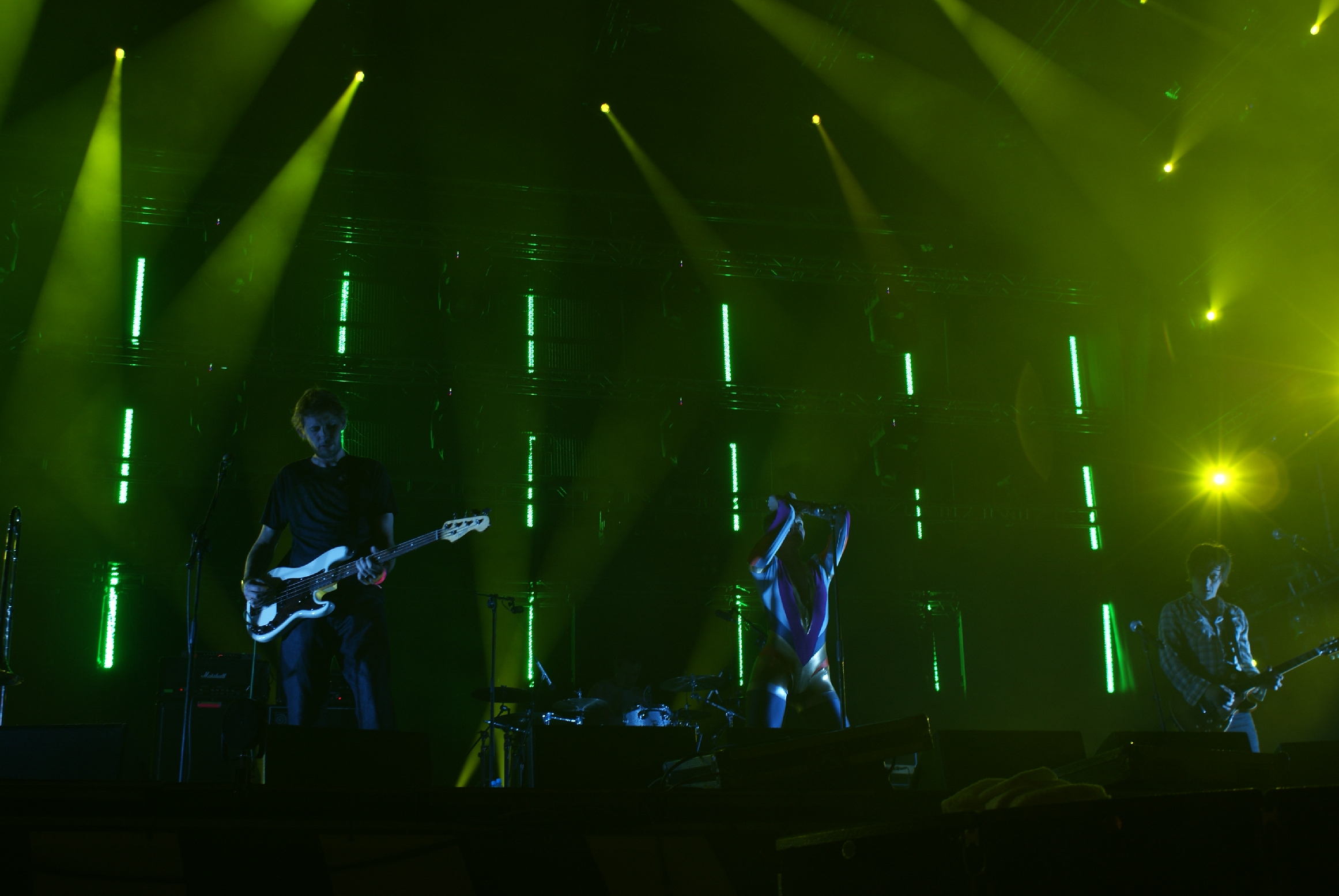
About Groove Armada
Groove Armada are one of the rare electronic acts whose catalogue works equally well at sunrise, in a club basement and on a festival main stage. Andy Cato and Tom Findlay built a sound that moves naturally between downtempo, house, dub, funk and pop without ever losing its identity.
From London club nights to an electronic institution
Groove Armada grew from DJ culture into a catalogue broad enough to contain chill-out classics, club records, pop songwriting and full-scale live performance.
Andy Cato and Tom Findlay met in London during the 1990s and began working together around a club night whose name eventually evolved into Groove Armada. Early releases for Tummy Touch introduced a project that was already difficult to reduce to one dance-music category: the duo could move from deep grooves and sample-driven club tracks to spacious downtempo material without making either side feel secondary.
“At the River” became the first defining Groove Armada recording. Built around an instantly recognizable vocal and horn motif, it grew into one of the era's enduring chill-out tracks. The 1999 album Vertigo widened the audience further with “I See You Baby,” “If Everybody Looked the Same” and a polished mixture of house, funk, breakbeats and atmospheric electronic production.
The breakthrough became even larger with Goodbye Country (Hello Nightclub) in 2001. “Superstylin'” supplied the heavyweight soundsystem energy, while “My Friend” showed the duo's melodic and reflective side. That contrast became fundamental to Groove Armada: their biggest records never forced them to choose between the dancefloor and the sofa.
Lovebox followed with another broad stylistic shift, including the soulful “Hands of Time.” The Groove Armada name also expanded beyond recordings into live performance and festival culture. Their concerts translated production-heavy electronic tracks into arrangements involving singers, percussion, keyboards, guitars and brass, giving the project a scale uncommon among studio-based dance acts of their generation.
Later albums such as Soundboy Rock, Black Light and Edge of the Horizon continued the same refusal to settle into nostalgia. The duo moved through electro, vocal house, synth-pop and darker club music while periodically returning to their own catalogue through remixes, anniversary projects and new versions. Decades after their first releases, Groove Armada remain active both as DJs and as a reference point for British electronic music that crossed successfully into the mainstream without abandoning club culture.
Key moments
From independent London releases to major albums, international stages and a catalogue that has remained in circulation for decades.
At the River
An early Groove Armada single becomes one of the duo's signature recordings and later a staple of international chill-out culture.
Northern Star
Groove Armada release their debut studio album through Tummy Touch.
Vertigo
The second album significantly expands the duo's audience and includes “I See You Baby,” “If Everybody Looked the Same” and “At the River.”
Goodbye Country (Hello Nightclub)
The album reaches the UK Top 10 and produces two of Groove Armada's defining tracks: “Superstylin'” and “My Friend.”
Lovebox
The fourth studio era brings another stylistic expansion, with material including “Hands of Time” and “Easy.”
Soundboy Rock
Groove Armada return with a UK Top-10 album that moves between dancehall-inflected club music, electronic pop and house.
Black Light
A darker, synth-led album demonstrates another reinvention of the Groove Armada production palette.
Edge of the Horizon
The duo release a new studio album featuring a range of vocal collaborators while retaining their characteristic balance of songwriting and electronic production.
GA25
The twenty-fifth-anniversary period revisits the catalogue through updated versions and celebrations of the duo's long-running career.
Essential tracks
Six recordings that show why Groove Armada cannot be reduced to a single corner of electronic music.
The bridge between chill-out culture and the main stage
Groove Armada's importance lies partly in the sheer range of contexts in which their music worked. “At the River” became synonymous with late-1990s and early-2000s chill-out culture, while “Superstylin'” could drive a festival crowd or soundsystem. “My Friend” and “Hands of Time” demonstrated a songwriting sensibility that reached listeners who might never have identified primarily with club music.
That breadth helped the duo outlive the scenes and marketing labels surrounding their early success. Their catalogue connects house, big beat, downtempo, dub, funk and electronic pop, while their live shows demonstrated that electronic records could be expanded into genuine band performances. Three Grammy nominations, a BRIT nomination and multiple UK Top-10 albums reflect the scale of that crossover, but the lasting evidence is the music itself: tracks from different phases of their career continue to coexist naturally in clubs, radio, playlists and festival sets.
DJs, producers and a live electronic band
The Groove Armada identity has always operated across both DJ culture and expanded live performance.
Andy Cato
Producer, DJ and multi-instrumentalist whose work with Tom Findlay forms the core of Groove Armada.
Tom Findlay
Producer and DJ whose partnership with Cato has driven the project since its London beginnings.
The live dimension
Groove Armada expanded studio productions into large live arrangements with vocalists and instrumentalists, helping the duo become a major festival act as well as a DJ partnership.
Official destinations
Verified destinations for Groove Armada music, current activity and catalogue listening.
Editorial profile prepared using the official Groove Armada website, Spotify, Apple Music and the official Groove Armada YouTube channel.
More from Groove Armada

Discussion
No comments yet. Be the first to share your thoughts!
No comments yet.