Track Details
Smells Like Teens Spirit
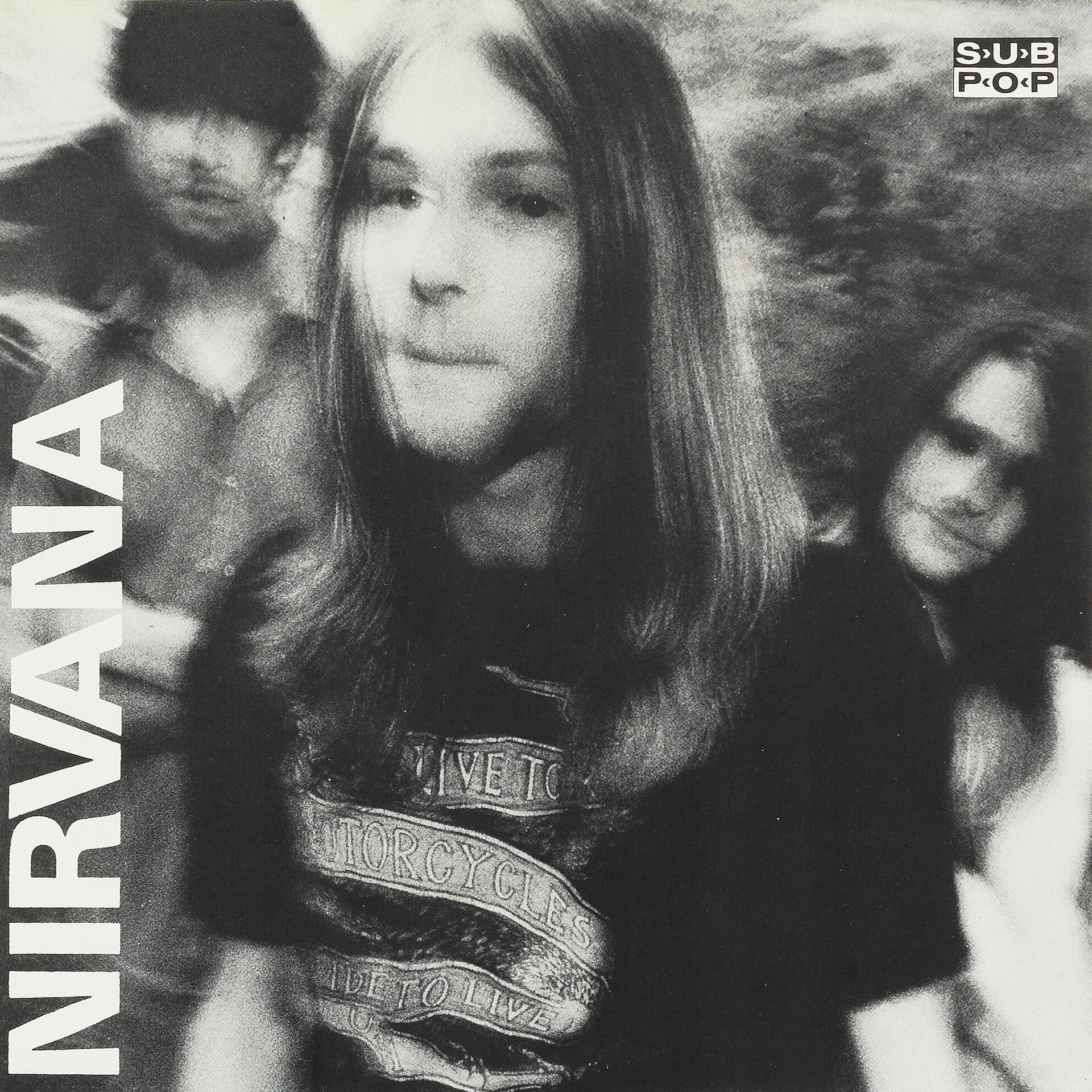
About Nirvana
Nirvana made contradiction sound natural. Kurt Cobain could bury a pop melody under guitar noise, Krist Novoselic could make a bass line feel almost casual beneath it, and Dave Grohl could turn a three-piece arrangement into something physically huge. The records are full of abrasion, humour, disgust, vulnerability and hooks that refuse to disappear. Their mainstream success changed the scale of alternative rock, but the music itself still sounds tied to small rooms, cheap equipment, underground records and the Pacific Northwest scene that produced it.
Three albums that changed the scale of alternative rock
Nirvana’s recorded history is short, but every studio album captures a visibly different version of the band.
Kurt Cobain and Krist Novoselic formed Nirvana in Aberdeen, Washington, in 1987 after moving through several early band names and line-ups. The music grew out of the Pacific Northwest underground rather than a single clean genre: punk economy, heavy riffs, pop songwriting and the influence of local bands such as Melvins all sit close together in the earliest recordings. By the time Sub Pop released Bleach in June 1989, Chad Channing was the drummer most closely associated with the first album period.
Bleach is heavier and less polished than the records that followed. Producer Jack Endino recorded the album for a tiny budget, and songs such as “Blew,” “School,” “Negative Creep” and “About a Girl” already show the two impulses that would define Nirvana: blunt force and unusually strong melody. “About a Girl” is particularly revealing because it sits almost awkwardly among the heavier material, a compact pop song hiding inside a record marketed through the Sub Pop grunge scene.
Dave Grohl joined in 1990, completing the line-up heard on Nevermind. Nirvana moved to DGC and recorded with producer Butch Vig at Sound City Studios. Released in September 1991, Nevermind turned an underground band into a global one. “Smells Like Teen Spirit” was the obvious detonation point, but the album’s endurance is not dependent on one single: “Come As You Are,” “Lithium,” “In Bloom,” “Drain You” and “Something in the Way” occupy very different emotional and dynamic spaces while still sounding unmistakably like the same band.
The commercial explosion around Nevermind created a problem Nirvana never fully resolved. Cobain disliked being treated as a spokesman for a generation and was uncomfortable with parts of the audience that had attached themselves to the band. The music became harsher again. Steve Albini recorded the basic tracks for In Utero in Minnesota in 1993, and the album deliberately exposed more room sound, noise and physical texture than its predecessor. Scott Litt later mixed several songs, including the singles “Heart-Shaped Box” and “All Apologies.”
Nirvana’s MTV Unplugged performance, recorded in New York on November 18, 1993, showed another side of the catalogue. Rather than constructing the set around the largest hits, the band played covers by the Vaselines, David Bowie and Lead Belly, and invited members of Meat Puppets to perform three of their own songs. Pat Smear joined the touring line-up on guitar and Lori Goldston added cello. The resulting performance is restrained without being comfortable; the quietness makes Cobain’s phrasing and the band’s arrangement choices unusually exposed.
Cobain died in April 1994, ending Nirvana after only a few years at international scale. MTV Unplugged in New York was released later that year and subsequently won the GRAMMY for Best Alternative Music Performance. Archival releases, live albums and anniversary editions have continued to expand the documented catalogue, but the core remains unusually compact: three studio albums, a set of singles and B-sides, and a live history that moved from tiny Northwest venues to arenas with almost no gradual middle period.
Key moments
Seven years from formation to the end of the band, followed by a substantial archival and institutional legacy.
Nirvana forms in Aberdeen
Kurt Cobain and Krist Novoselic begin the band in Washington State, working through several names and drummers before settling into the identity that becomes Nirvana.
Bleach
Sub Pop releases Nirvana’s debut album in June. Jack Endino produces, and Chad Channing is the principal drummer on the record.
Dave Grohl joins
Grohl becomes Nirvana’s drummer, establishing the Cobain–Novoselic–Grohl line-up that records the band’s two major-label studio albums.
Nevermind
Released in September through DGC, the album carries Nirvana from alternative-rock audiences into global mainstream culture, led by “Smells Like Teen Spirit.”
Incesticide
The compilation gathers B-sides, BBC material, covers, demos and earlier recordings, preserving a less polished side of the band during the height of Nevermind-era fame.
In Utero
Nirvana release their third studio album, recorded principally with Steve Albini. “Heart-Shaped Box,” “All Apologies” and “Rape Me” become central tracks from the period.
MTV Unplugged in New York
The band records its now-famous acoustic television performance on November 18, choosing an unusual set heavy on covers and less obvious catalogue material.
The end of Nirvana
Kurt Cobain dies in April. Nirvana ends as an active band; MTV Unplugged in New York is released in November.
GRAMMY win
MTV Unplugged in New York wins Best Alternative Music Performance, Nirvana’s first GRAMMY victory.
Rock & Roll Hall of Fame
Nirvana are inducted in their first year of eligibility, with Michael Stipe of R.E.M. presenting the band.
Essential releases
The three studio albums plus the live record that revealed how much of Nirvana’s power survived without volume.
Essential tracks
Six songs that cover Nirvana’s instinct for hooks, dynamic contrast, noise and stripped-back performance.
The band that made the underground impossible to ignore
Nirvana did not invent alternative rock, punk-derived guitar music or the Seattle scene, and their success makes more sense when those earlier networks are kept visible. Sub Pop, college radio, independent touring circuits and bands such as Melvins, Mudhoney and Sonic Youth had already built the environment around them. What changed with Nevermind was scale. A sound associated with clubs, independent labels and specialist radio was suddenly competing at the centre of the commercial record business.
The songwriting explains why the shift travelled so far. Cobain’s guitar parts are often simple enough to survive acoustic performance, distortion or radical changes in dynamics. “About a Girl,” “Lithium,” “All Apologies” and “Come As You Are” do not need production spectacle to remain recognisable. Grohl’s drumming and Novoselic’s bass frequently make the arrangements feel larger than the chord structures suggest.
The cultural image around Nirvana became enormous after Cobain’s death, sometimes large enough to obscure the actual records. The best correction is still the catalogue itself: Bleach sounds like a hungry regional band, Nevermind like a precise collision between underground songwriting and major-label production, and In Utero like musicians deliberately scraping away some of that polish. The progression happened in four years.
The people and recordings around the core trio
Nirvana’s familiar three-piece image leaves out several musicians and collaborators who shaped important periods of the catalogue.
Chad Channing
Channing was Nirvana’s principal drummer during the Bleach period and appears across much of the debut album before leaving the band in 1990.
Pat Smear
The Germs guitarist joined Nirvana as a touring guitarist in 1993 and appears in the MTV Unplugged in New York performance.
Steve Albini
Albini recorded In Utero in 1993, capturing a drier, more abrasive and room-heavy sound than the polished presentation of Nevermind.
Meat Puppets on Unplugged
Curt and Cris Kirkwood joined Nirvana for three Meat Puppets songs during the 1993 MTV set, an unusual decision for a television performance expected to foreground familiar hits.
Official destinations
Official and verified destinations for Nirvana’s catalogue, videos, physical releases and archival material.
Editorial profile prepared using Nirvana’s official website, Sub Pop, Spotify, the Recording Academy / GRAMMY.com, the Rock & Roll Hall of Fame and MusicBrainz / Cover Art Archive.
More from Nirvana

Discussion
No comments yet. Be the first to share your thoughts!
No comments yet.