Track Details
Serila Thrilla
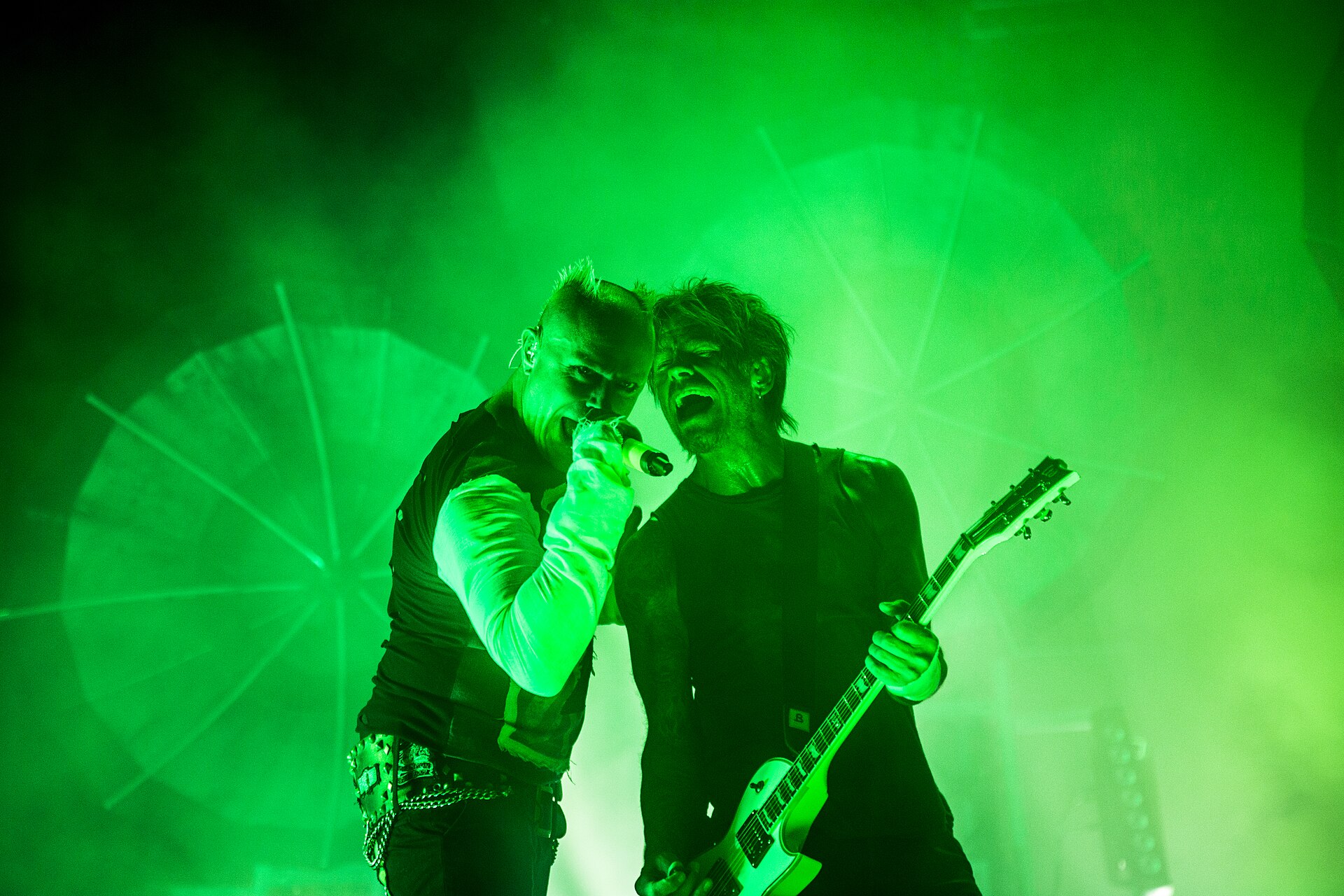
About The Prodigy
The Prodigy turned rave music into a physical, confrontational live experience without losing the precision of electronic production. Their records connect breakbeat hardcore, punk attitude, hip-hop sampling, techno pressure and stadium-scale hooks — exactly the kind of cross-generational energy YGEN was built to celebrate.
From Essex rave tapes to a global live force
The Prodigy did not simply bring underground dance music into the mainstream. They changed the way electronic music could look, move and behave on a stage.
The project began around Liam Howlett’s productions and the early-1990s rave culture surrounding Essex and London. Howlett’s tracks combined chopped breakbeats, hip-hop technique, accelerated samples and bright hardcore synths. Keith Flint and Leeroy Thornhill initially gave the music a visible live identity as dancers, while Maxim added an MC presence that made the shows feel closer to a sound-system clash than a conventional electronic concert.
The debut album Experience captured the velocity and colour of the early rave era, but The Prodigy quickly resisted being trapped inside it. Music for the Jilted Generation expanded the palette into darker breakbeats, rock textures and anti-establishment tension. It established Howlett as an album-focused producer capable of turning rave mechanics into dramatic, carefully sequenced electronic music.
Keith Flint’s transformation from dancer into the confrontational frontman of “Firestarter” altered the group’s public image. Alongside Maxim, he gave The Prodigy two sharply different vocal personalities: Flint as the unstable punk provocateur and Maxim as the commanding MC. On The Fat of the Land, that chemistry helped electronic music occupy the same cultural space as the decade’s biggest rock acts without becoming a rock band in the traditional sense.
The group continued to mutate through the 2000s and 2010s, moving between studio experimentation and increasingly heavy live performance. Invaders Must Die reconnected their rave foundations with the force of their festival sound, while The Day Is My Enemy and No Tourists reinforced their commitment to abrasive rhythm, collective energy and music designed to hit hardest in a crowd.
Keith Flint’s death in 2019 marked an irreversible loss. Liam Howlett and Maxim later returned to the stage, presenting the music with Flint’s presence acknowledged rather than replaced. The continuing live project now operates as both a forward-moving electronic act and a celebration of a uniquely volatile creative partnership.
Key moments
A concise route through the records and transformations that shaped The Prodigy.
The group forms in Braintree
Liam Howlett’s productions become the foundation of a live unit featuring dancers Keith Flint, Leeroy Thornhill and Sharky, with Maxim joining as MC.
“Charly” breaks through
The early single brings The Prodigy’s sample-heavy breakbeat hardcore into the centre of the UK rave conversation.
Experience defines the first era
The debut album consolidates the group’s early singles into a vivid document of rave-era momentum, melody and accelerated breakbeats.
Music for the Jilted Generation
A darker and broader second album pushes beyond hardcore conventions through rock pressure, cinematic sequencing and tracks such as “Voodoo People” and “No Good (Start the Dance).”
Keith Flint becomes the voice of “Firestarter”
The single unveils Flint as a vocalist and creates one of electronic music’s most recognisable visual and sonic identities.
The Fat of the Land goes global
“Firestarter,” “Breathe” and “Smack My Bitch Up” anchor an album that turns The Prodigy into an international headline act.
Always Outnumbered, Never Outgunned
Liam Howlett rebuilds the studio sound around distorted electro, guest voices and dense programming before the group’s live identity reconverges.
Invaders Must Die reunites the classic energy
The album reconnects Howlett, Flint and Maxim around a direct fusion of rave hooks, punk aggression and festival-scale production.
Keith Flint dies
The death of the group’s iconic vocalist and performer brings touring to a halt and leaves a permanent absence at the centre of The Prodigy’s story.
The Prodigy return to live performance
Liam Howlett and Maxim bring the group back to the stage, retaining the music’s physical intensity while honouring Flint within the production.
Essential releases
Six albums that trace the movement from breakbeat hardcore to a singular fusion of rave, punk and electronic rock.
Essential tracks
A six-track introduction to the group’s rave roots, mid-1990s reinvention and later resurgence.
Electronic music with the impact of a punk show
The Prodigy helped destroy the idea that electronic acts belonged behind static equipment. Their live language — MC confrontation, dancer movement, strobes, distorted beats and crowd participation — made programmed music feel dangerous, immediate and visibly human.
Their catalogue also offers a bridge between scenes that were often treated as separate: rave, hip-hop, techno, industrial music, punk and alternative rock. That hybrid identity made them accessible to festival crowds without diluting the breakbeat architecture at the centre of Liam Howlett’s production.
Keith Flint remains one of electronic music’s defining frontmen. His image is inseparable from “Firestarter,” but his deeper contribution was physical: he gave the group’s tension, humour and aggression a body. The continuing power of The Prodigy comes from the balance between that performance legacy, Maxim’s authority and Howlett’s obsessive rhythmic design.
More than a studio project
The Prodigy’s membership and stage roles evolved, but the collision between producer, MC and physical performance remained central.
Liam Howlett
Producer, composer and the principal architect of The Prodigy’s sound, from early rave programming to the group’s later, heavier records.
Maxim
MC and vocalist whose commanding delivery gives the live show its sound-system authority and provides a contrasting presence to Flint’s punk persona.
Keith Flint
Originally a dancer, later the group’s most recognisable vocalist and frontman. His performances on “Firestarter” and “Breathe” permanently changed The Prodigy’s image.
Leeroy Thornhill
A founding dancer and live performer whose movement helped define the visual identity of The Prodigy’s early rave-era shows.
Official destinations
Follow current activity, tour dates, official videos and the complete streaming catalogue.
Editorial profile prepared using The Prodigy’s official website and channels, Spotify, MusicBrainz and Cover Art Archive.
More from The Prodigy
Discussion
No comments yet. Be the first to share your thoughts!
No comments yet.