Track Details
Stop The Rock
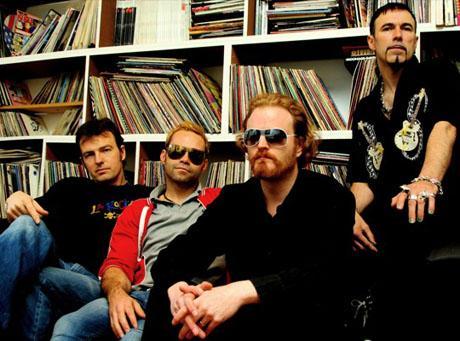
About apollo 440
Apollo 440 bridge big beat, rock energy, and cinematic electronics, making them a quintessential crossover act of the late 1990s and 2000s.
From Liverpool studios to global soundtracks
Apollo 440 emerged from Liverpool's underground scene with a studio-first mindset, then evolved into a genre-blending live band whose music travelled far beyond clubs.
Formed in Liverpool in 1990 by brothers Howard and Trevor Gray alongside guitarist and producer Noko, Apollo 440 began life as studio heads steeped in sampling culture, acid house, and alternative rock.
Early releases on their Stealth Sonic Recordings imprint, together with remix work for artists like U2 and EMF, established them as producers who could fold breakbeats, guitars, and cinematic textures into club-ready tracks without losing songwriting focus.
By the mid-1990s they had stepped fully into the big beat moment, releasing albums and singles that sat comfortably next to contemporaries like Fatboy Slim and Propellerheads while retaining a distinctly guitar-driven edge.
Across records such as Millennium Fever, Electro Glide in Blue, and Gettin' High on Your Own Supply, they pushed a hybrid sound that moved between rave euphoria, psychedelic rock, and atmospheric downtempo.
Their work for film, television, advertisements, and video games amplified that reach: themes, remixes, and standalone tracks became fixtures in soundtracks, making Apollo 440 one of the more ubiquitous crossover electronic rock acts of their era.
Key moments
A trajectory that runs from early 1990s underground releases to chart hits and enduring soundtrack staples.
Apollo 440 form in Liverpool
Howard and Trevor Gray, Noko, and James Gardner create Apollo 440, initially centred around studio experimentation and live electronics.
Debut album Millennium Fever
The group release their first full-length, introducing their blend of breakbeats, guitars, and widescreen electronics to a broader audience.
Electro Glide in Blue and UK chart breakthroughs
The second album arrives alongside singles such as "Krupa" and "Ain't Talkin' 'Bout Dub", giving Apollo 440 multiple UK Top 40 entries.
Gettin' High On Your Own Supply and "Stop the Rock"
A third album and the single "Stop the Rock" cement the band’s reputation, with the track later used extensively in films, adverts, and games.
Dude Descending a Staircase
Apollo 440 continue to evolve their sound, mixing rock riffs, electronic grooves, and art references on their fourth studio album.
The Future's What It Used to Be
The band return with a fifth studio album, underscoring their longevity and ongoing interest in genre-blending electronic rock.
"Solstice" single
Apollo 440 release the single "Solstice", signalling continued activity and new material decades after their formation.
Essential releases
Albums that map Apollo 440’s progression from early big beat experiments to widescreen electronic rock and soundtrack-ready material.


Essential tracks
Singles and key cuts that capture Apollo 440's blend of sampled riffs, electronic rhythm, and stadium-sized hooks.
Big beat, guitars, and media ubiquity
Apollo 440 occupy a distinctive place in electronic music history as a band who treated big beat not just as a club style but as a playground for rock riffs, jazz references, and cinematic sound design.
Their singles and albums helped define a more maximalist, stadium-leaning side of late-1990s dance music, while their omnipresence in films, adverts, and games turned tracks like "Stop the Rock" into part of everyday pop culture background noise.
Official destinations
Stream, follow, or buy releases directly from verified Apollo 440 profiles and catalogues.
Editorial profile prepared using verified discography and biographies from Wikipedia, Apple Music, Spotify and official Apollo 440 resources.
More from Apollo 440
Discussion
No comments yet. Be the first to share your thoughts!
No comments yet.