

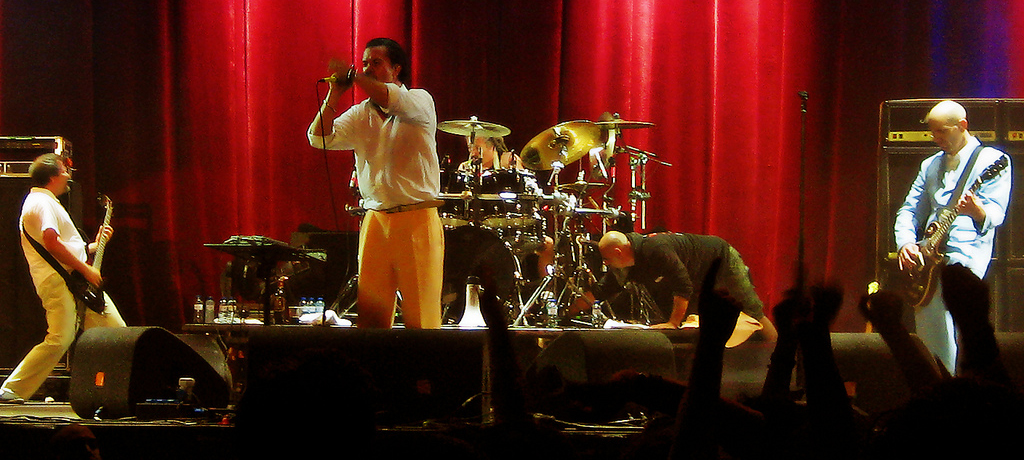
Artist
Faith No More
Why we feature this artist The band that made the wrong ingredient essential Faith No More could put a heavy guitar, a keyboard melody, a slap-bass figure and a crooned vocal into the same song without treating the collision as a joke. The elements kept their …
- From
- United States
- Sound
- Alternative metal, funk metal, alternative rock, experimental rock
- Active
- 1979–1998, 2009–2021, 2026–present
Start with the music
Tracks to explore
The artist, in context
The story of Faith No More
Why we feature this artist
The band that made the wrong ingredient essential
Faith No More could put a heavy guitar, a keyboard melody, a slap-bass figure and a crooned vocal into the same song without treating the collision as a joke. The elements kept their differences. That friction gave the band a sound that could be catchy and unsettling at once, especially as Mike Patton became more deeply involved in the writing.
The Real Thing changes the audience
The San Francisco group's earlier records featured Chuck Mosley, whose voice helped define songs such as We Care a Lot. Patton joined before The Real Thing, released in 1989. Billy Gould's bass, Mike Bordin's drums, Roddy Bottum's keyboards and Jim Martin's guitar provided a highly individual setting, with Patton adding a vocal range that could shift abruptly from melodic to abrasive.
Epic became the breakthrough single in 1990. Its rapped phrases and heavy chorus made it easy to describe in broad stylistic terms, but the album around it was less easily reduced. Falling to Pieces, the title track and the instrumental Woodpecker from Mars moved through different kinds of drama, making the record feel larger than the combination of rap and metal suggested by its best-known song.
Angel Dust refuses to settle
Angel Dust followed in 1992, giving Patton a fuller role in the material. Midlife Crisis and A Small Victory could be immediate and strange at the same time; other passages turned toward grotesque character voices, unexpected textures and uncomfortable shifts of mood. The band used the success of The Real Thing to make its next record more particular rather than easier to classify.
King for a Day... Fool for a Lifetime in 1995 brought another change of personnel and a wider swing between aggressive rock and other song forms. Evidence is a strikingly smooth performance in that context. The point was never simply to include as many styles as possible: Faith No More made the listener question why a supposedly incompatible sound should not belong in the song.
Essential releases
The Real Thing
Epic and Falling to Pieces introduce Patton within an already distinctive instrumental band.
Angel Dust
Midlife Crisis and A Small Victory sit inside a darker, more unpredictable set of arrangements.
King for a Day... Fool for a Lifetime
Evidence reveals another facet of a record that moves freely between forceful rock and contrasting song forms.