

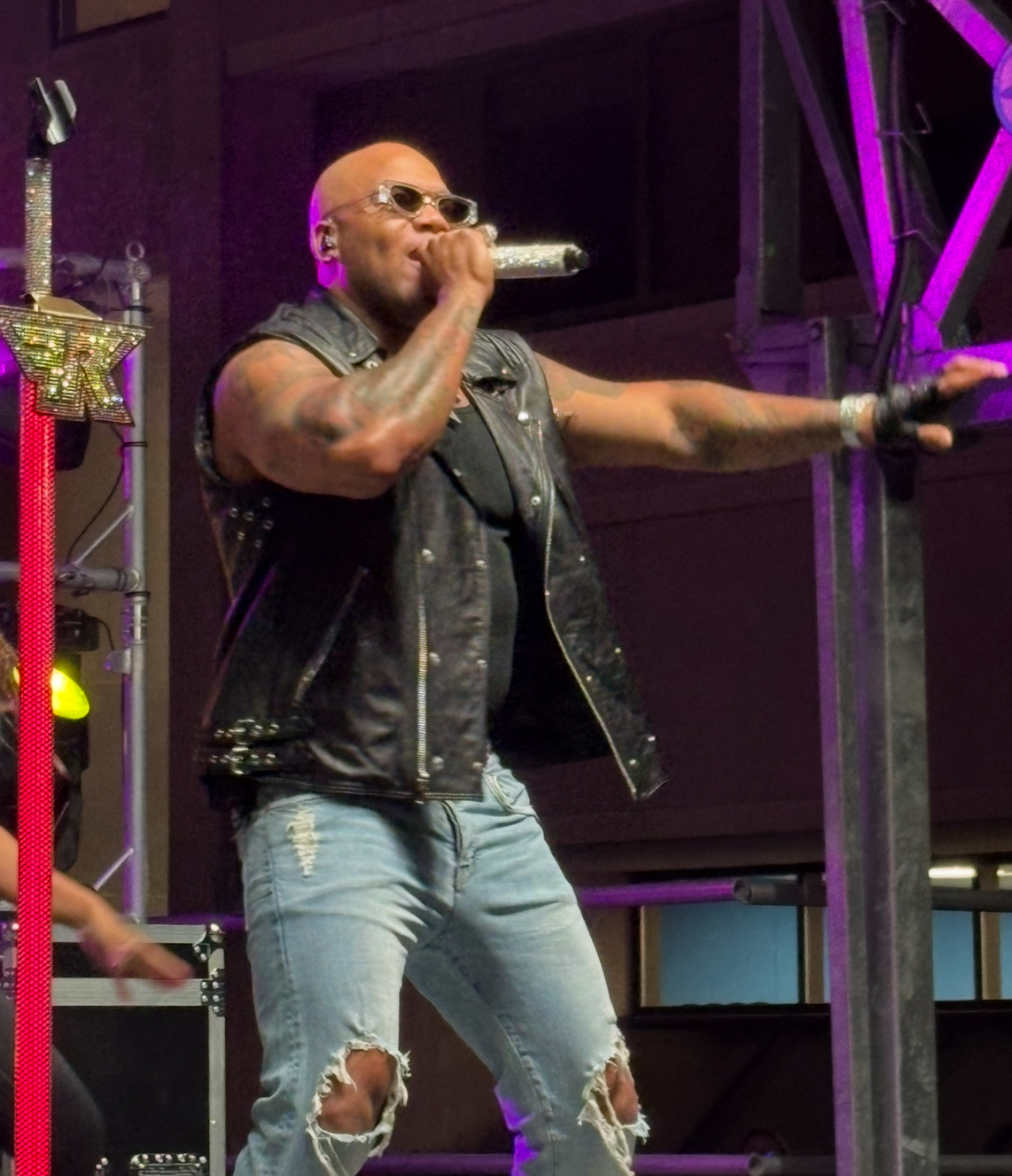
Artist
Flo Rida
Why we feature this artist Rap verses designed for a crowded dancefloor Flo Rida's records understand the value of a chorus that needs very little explanation. The Florida rapper built a run of singles around clipped, rhythmically agile verses, instantly recog…
- From
- United States
- Sound
- Hip-hop, pop
- Active
- 2000–present
Start with the music
Tracks to explore
The artist, in context
The story of Flo Rida
Why we feature this artist
Rap verses designed for a crowded dancefloor
Flo Rida's records understand the value of a chorus that needs very little explanation. The Florida rapper built a run of singles around clipped, rhythmically agile verses, instantly recognisable hooks and production that could move comfortably between hip-hop radio and a large club system. The collaborators often provide a different voice for the same rush of energy.
Low and the first albums
Born Tramar Dillard, Flo Rida worked through the Miami music scene before Low brought a much larger audience. The T-Pain collaboration appeared in 2007, ahead of the debut album Mail on Sunday in 2008. Its contrast is economical: a firmly repeated sung hook, a heavy beat and verses that keep their movement light enough to leave the chorus room.
The album also included Elevator and In the Ayer, extending the emphasis on physical momentum. R.O.O.T.S. followed in 2009 with Right Round and Sugar. Right Round reworked an immediately familiar pop idea from Dead or Alive, making recognition itself part of the arrangement. These recordings were built to make their central musical gesture clear very quickly.
The move toward larger electronic hooks
Club Can't Handle Me, with David Guetta, helped define the next stage in 2010. The surrounding production moved more decisively toward electronic dance music, with rising passages and broad synth textures framing the vocal. Flo Rida's rapping functioned as another rhythmic instrument, adding movement and personality before the song opened into its main refrain.
Wild Ones in 2012 gathered Good Feeling, Whistle and the Sia collaboration that gave the album its title. Each single found a different melodic device to make the record immediately identifiable. The album is a useful snapshot of pop-rap at the moment when festival-scale dance production became central to its vocabulary: short verbal phrases, large choruses and very little empty space between the hooks.
Essential releases
Mail on Sunday
Low, Elevator and In the Ayer establish the early combination of agile rap and easily recognised choruses.
R.O.O.T.S.
Right Round and Sugar make familiar melodic material part of a highly direct pop-rap approach.
Wild Ones
The Sia collaboration, Good Feeling and Whistle bring several distinct hooks into an electronic dance setting.