

Artist
Florence + The Machine
Why we feature this artist A private feeling on an enormous scale Florence + The Machine give inner turmoil the space of a large live room. Florence Welch’s voice can be delicate and then suddenly overwhelming, while drums, keyboards and ringing instrumental c…
- From
- United Kingdom
- Sound
- Indie rock, alternative rock, baroque pop, soul
- Active
- 2007–present
Start with the music
Tracks to explore

The artist, in context
The story of Florence + The Machine
Why we feature this artist
A private feeling on an enormous scale
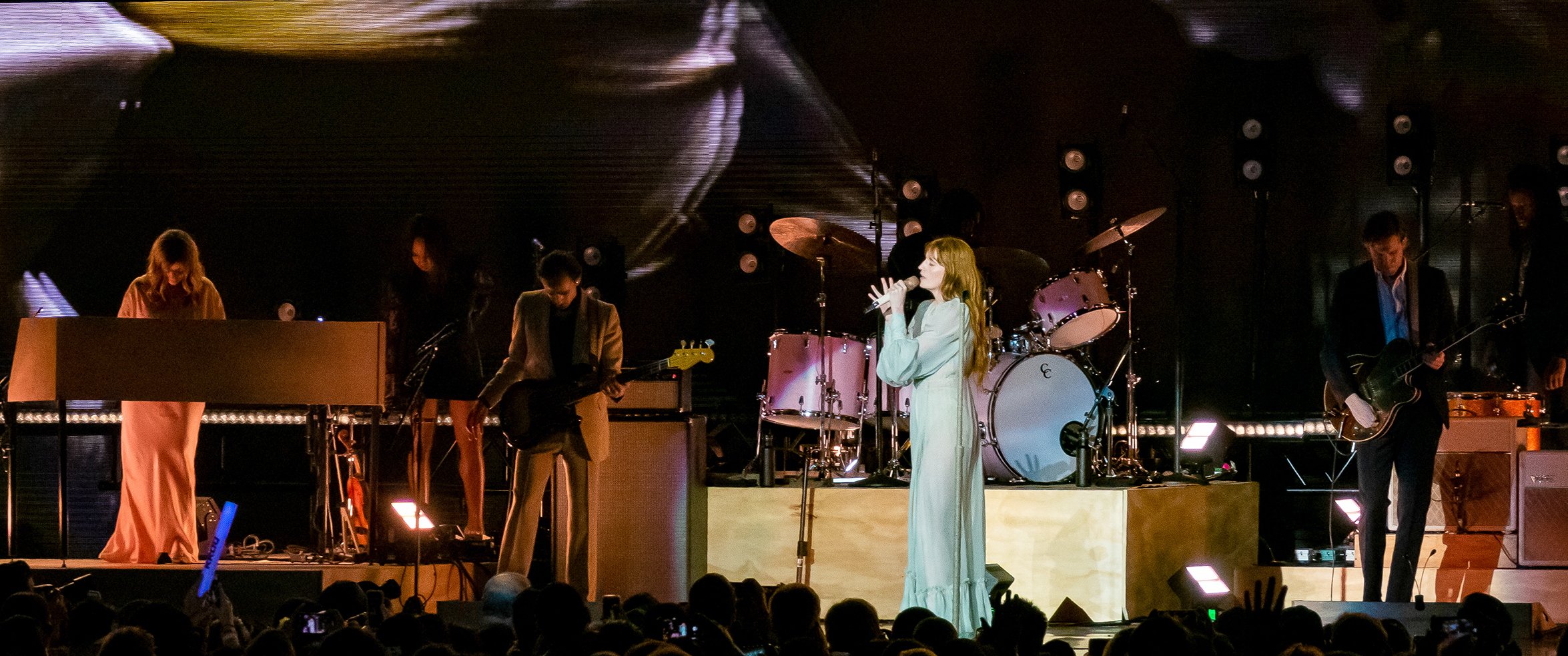
Florence + The Machine give inner turmoil the space of a large live room. Florence Welch’s voice can be delicate and then suddenly overwhelming, while drums, keyboards and ringing instrumental colours build the setting around it. The songs are theatrical, but their emotional details keep the spectacle connected to a person.
The first album gathers the elements
Lungs arrived in 2009 with Dog Days Are Over, Rabbit Heart and other songs that introduced an unusually expansive pop identity. The rhythms can feel physical and insistent, while the melody keeps rising beyond an expected stopping point. The arrangements have plenty of colour, but the voice provides a clear route through them. A quieter line can make the next large entrance feel like a release rather than simply another increase in volume.
The band’s cover of You’ve Got the Love offered another point of entry, placing an already familiar song within that particular combination of vocal force and dramatic build. The debut works best as a whole because the moods vary: unease, exhilaration and a more fragile intimacy all belong in the same musical world.
More space around the storm
Ceremonials followed in 2011, developing a broader and more concentrated sound through songs including Shake It Out and What the Water Gave Me. The scale becomes larger, yet the emotional movement remains important. How Big, How Blue, How Beautiful in 2015 gives other instrumental textures and a more exposed perspective room to emerge. Later albums continue to change that balance rather than treating the debut’s most recognisable gestures as fixed instructions. The catalogue rewards listening to how the voice meets the arrangement: sometimes carried by it, sometimes straining against it and sometimes left almost alone. That changing relationship gives the dramatic choruses their weight and keeps the music from becoming a permanent state of climax.
Essential releases
Lungs
Dog Days Are Over and Rabbit Heart introduce the broad rhythmic and vocal scale, while the rest of the debut reveals quieter and less immediately reassuring corners.
Ceremonials
Shake It Out offers a clear route into a larger, more concentrated production, with the vocal line still carrying the emotional changes through the instrumental weight.
How Big, How Blue, How Beautiful
A different balance of textures gives the writing more exposed space, making the album a rewarding next step after the first two records.