
Artist
Madonna
Madonna made pop records and then built complete worlds around them: the wedding-dress VMA appearance, David Fincher’s monochrome “Vogue,” William Orbit’s glassy electronics on Ray of Light, Stuart Price’s club-focused Confessions. The songs are the centre; the decisions around them explain why the catalogue still feels active.
Pop as a complete medium
Her catalogue keeps changing its surface, but the working method is remarkably consistent: find the right collaborators, understand the room the music is meant for, and make the visual language carry equal weight.
Madonna relocated to New York in 1978. Five years later, her self-titled debut was out, with “Holiday,” “Borderline” and “Lucky Star” among the songs that established her on radio, MTV and dance floors. The early records were lean and club-minded; the ambition surrounding them was already much larger.
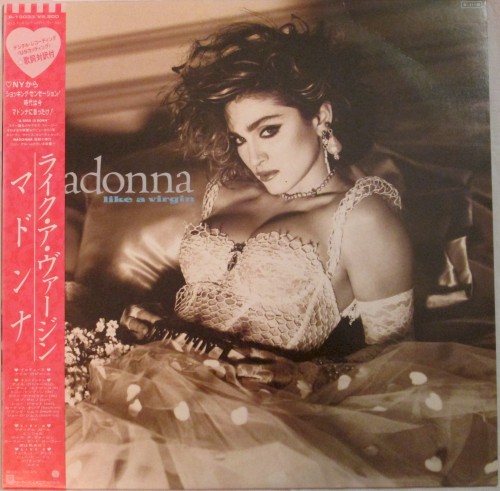
Like a Virgin arrived in November 1984 with Nile Rodgers producing. It spent three weeks at No. 1 on the Billboard 200, and the title single held the Hot 100 summit for six weeks. By then a Madonna single came with an image people could identify instantly. The wedding dress at the inaugural MTV Video Music Awards became as fixed in pop memory as the song itself.
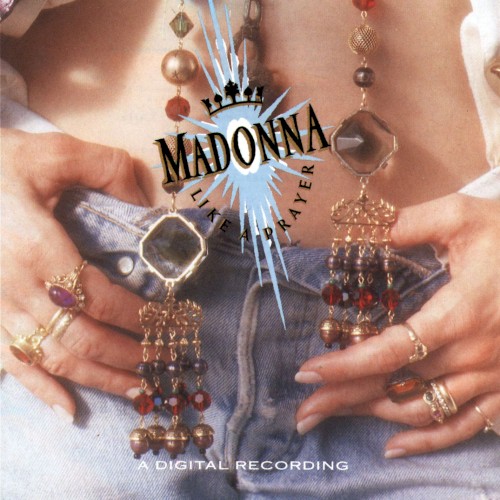
On Like a Prayer in 1989, she worked with Patrick Leonard and placed the huge gospel-powered title track beside songs such as “Promise to Try” and “Oh Father.” The album reached No. 1 around the world; “Like a Prayer” topped the singles charts in the U.S. and U.K. A year later, “Vogue” arrived with David Fincher’s black-and-white video, another case where choreography, styling and camera language became inseparable from the recording.
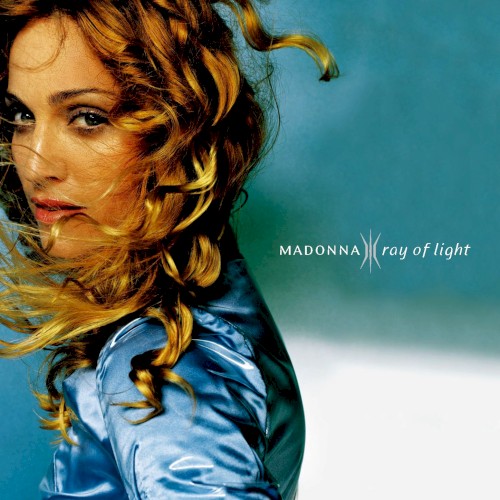
Film remained part of the workload. Her performance as Eva Perón in Evita won the 1997 Golden Globe for Best Actress in a Motion Picture — Musical or Comedy. Then came Ray of Light in 1998, made with William Orbit: colder electronics, distorted guitars and a different vocal presence. The album earned six Grammy nominations, with Madonna winning Best Pop Album, Best Dance Recording and Best Short Form Music Video.
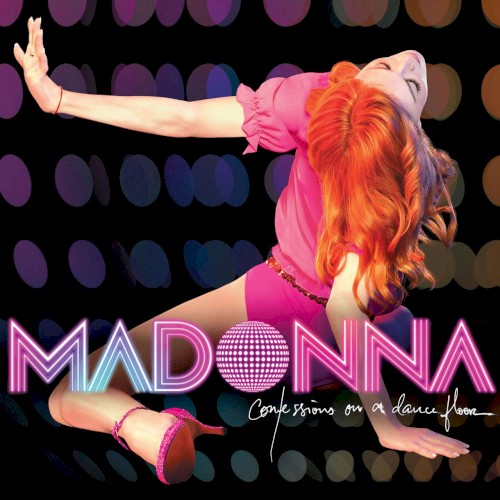
Confessions on a Dance Floor pulled the focus back toward club music in 2005 and later won the Grammy for Best Dance/Electronic Album. Nearly two decades after that record, the Celebration Tour turned her catalogue into a four-decade retrospective and finished with a free Copacabana Beach show in Rio on May 4, 2024. In 2026 she reunited with Stuart Price for Confessions II, released by Warner Records on July 3.
Key moments
Ten points where the scale, sound or public shape of the work changed noticeably.
New York
Relocates to New York City, where dance, clubs and the downtown music scene become the setting for her early career.
Madonna
The self-titled debut album establishes the first run of dance-pop singles, including “Holiday,” “Borderline” and “Lucky Star.”
Like a Virgin
Produced by Nile Rodgers, the second album becomes her first Billboard 200 No. 1; its title track gives her a first Hot 100 No. 1.
Like a Prayer
The Patrick Leonard collaboration reaches No. 1 around the world, with the title single topping the U.S. and U.K. charts.
Golden Globe for Evita
Wins Best Actress in a Motion Picture — Musical or Comedy for her performance as Eva Perón.
Ray of Light
The William Orbit-produced album moves deep into electronica; its Grammy campaign brings wins for Best Pop Album, Best Dance Recording and Best Short Form Music Video.
Confessions on a Dance Floor
A renewed club focus produces “Hung Up” and an album that wins Best Dance/Electronic Album at the 2007 Grammys.
Rock & Roll Hall of Fame
Inducted into the Rock & Roll Hall of Fame in the Performer category.
Copacabana finale
The Celebration Tour concludes with a free concert at Copacabana Beach in Rio de Janeiro on May 4.
Confessions II
Warner Records releases the Stuart Price collaboration on July 3, explicitly continuing the dance-floor idea of the 2005 album.
Essential releases
Four albums that catch distinct versions of Madonna’s studio thinking without trying to reduce a long catalogue to a greatest-hits list.
Essential tracks
Six recordings, each linked to Madonna’s official YouTube channel, that show how often the production language changed without losing the pop instinct underneath.
The pop star as author of the whole frame
The Rock & Roll Hall of Fame inducted Madonna in 2008 and now places artists including Lady Gaga, Beyoncé, Britney Spears, Rihanna and Nicki Minaj among those influenced by her. The useful part of that lineage is visible in the work itself: a pop era can have its own visual grammar, choreography, collaborators, staging and argument, rather than functioning as a sleeve around a collection of songs.
Her catalogue also resists being trapped in one production decade. Nile Rodgers’ precision on Like a Virgin, Patrick Leonard’s writing partnership on Like a Prayer, William Orbit’s electronics on Ray of Light and Stuart Price’s dance-floor focus on the Confessions records do not sound like variations on one formula. Madonna’s role is the continuity: choosing the room, the collaborators and the image, then making the result unmistakably hers.
Screen, stage and current activity
Three pieces of context that sit outside the core album sequence but matter to the scale of the career.
Evita
Madonna played Eva Perón in Alan Parker’s film adaptation and won the 1997 Golden Globe for Best Actress in a Motion Picture — Musical or Comedy.
The Celebration Tour
The 2023–24 retrospective covered four decades of music and ended with a free concert at Copacabana Beach in Rio de Janeiro on May 4, 2024.
Confessions II
Released July 3, 2026 via Warner Records, the album reunites Madonna with Stuart Price and explicitly continues the idea of Confessions on a Dance Floor.
Official destinations
Official artist, label-verified streaming and store destinations.
Editorial profile prepared using Madonna.com, Warner Records, the Recording Academy, the Rock & Roll Hall of Fame, Golden Globes, MusicBrainz, the Cover Art Archive and Raising Malawi. Links checked September 2026.
Tracks in our playlist
