

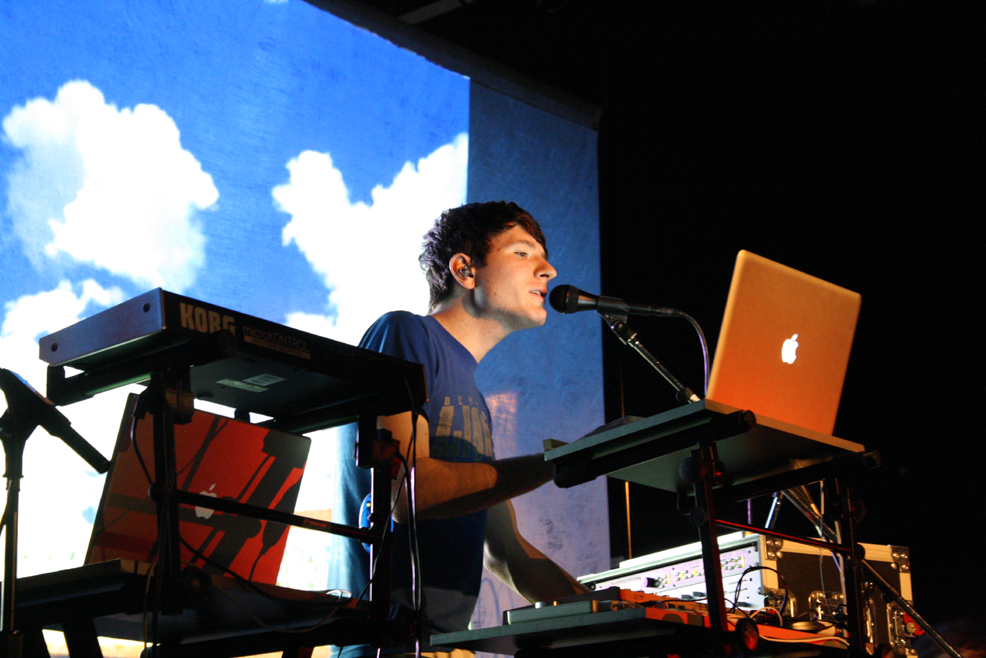
Artist
Owl City
Why we feature this artist Adam Young builds a small world with a very large sky Fireflies made Owl City familiar through an unusually delicate kind of electronic pop. The bright instrumental figures and Adam Young’s close singing create a place that feels ima…
- From
- United States
- Sound
- synth-pop
- Active
- 2007–present
Start with the music
Tracks to explore
The artist, in context
The story of Owl City
Why we feature this artist
Adam Young builds a small world with a very large sky
Fireflies made Owl City familiar through an unusually delicate kind of electronic pop. The bright instrumental figures and Adam Young’s close singing create a place that feels imagined in detail, with wonder and loneliness occupying the same room.
A private recording project becomes a public one
Young developed Owl City in Minnesota, beginning with music made in his parents’ basement. Hello Seattle helped establish an early audience before Ocean Eyes arrived as the major-label breakthrough in 2009. The record’s appeal depends on more than the novelty of its imagery. A clear melodic line gives the listener a route through the small electronic sounds accumulating around it.
All Things Bright and Beautiful in 2011 extended that musical world. The Midsummer Station followed in 2012, including Good Time with Carly Rae Jepsen. The duet makes the public, communal side of the project more explicit, placing two voices inside a brisk pop arrangement without removing Young’s fondness for bright, carefully arranged detail.
The story can be invented or closely remembered
Later albums bring other performers and different storytelling scales into view. Mobile Orchestra includes collaborations with Aloe Blacc, Hanson and Jake Owen, while Coco Moon gives Young’s interest in cinematic writing a particularly clear setting. The Tornado builds an invented story around a child caught in a storm. Adam, Check Please returns to something more personal, drawing on his first grocery-store job. Those two subjects clarify an important quality of Owl City: the music need not choose between an imagined escape and an ordinary remembered place. Both can become vivid through arrangement. The early electronic miniatures and the later, larger pieces share an interest in how a modest image can open into a whole scene, making the production part of the storytelling rather than an ornamental backdrop.
Essential releases
Ocean Eyes
Fireflies and Hello Seattle introduce the project’s close voice and detailed electronic setting.
The Midsummer Station
Good Time with Carly Rae Jepsen gives the pop writing a particularly direct shared-vocal form.
Coco Moon
Invented scenes and personal memories acquire a broader, more cinematic arrangement.