

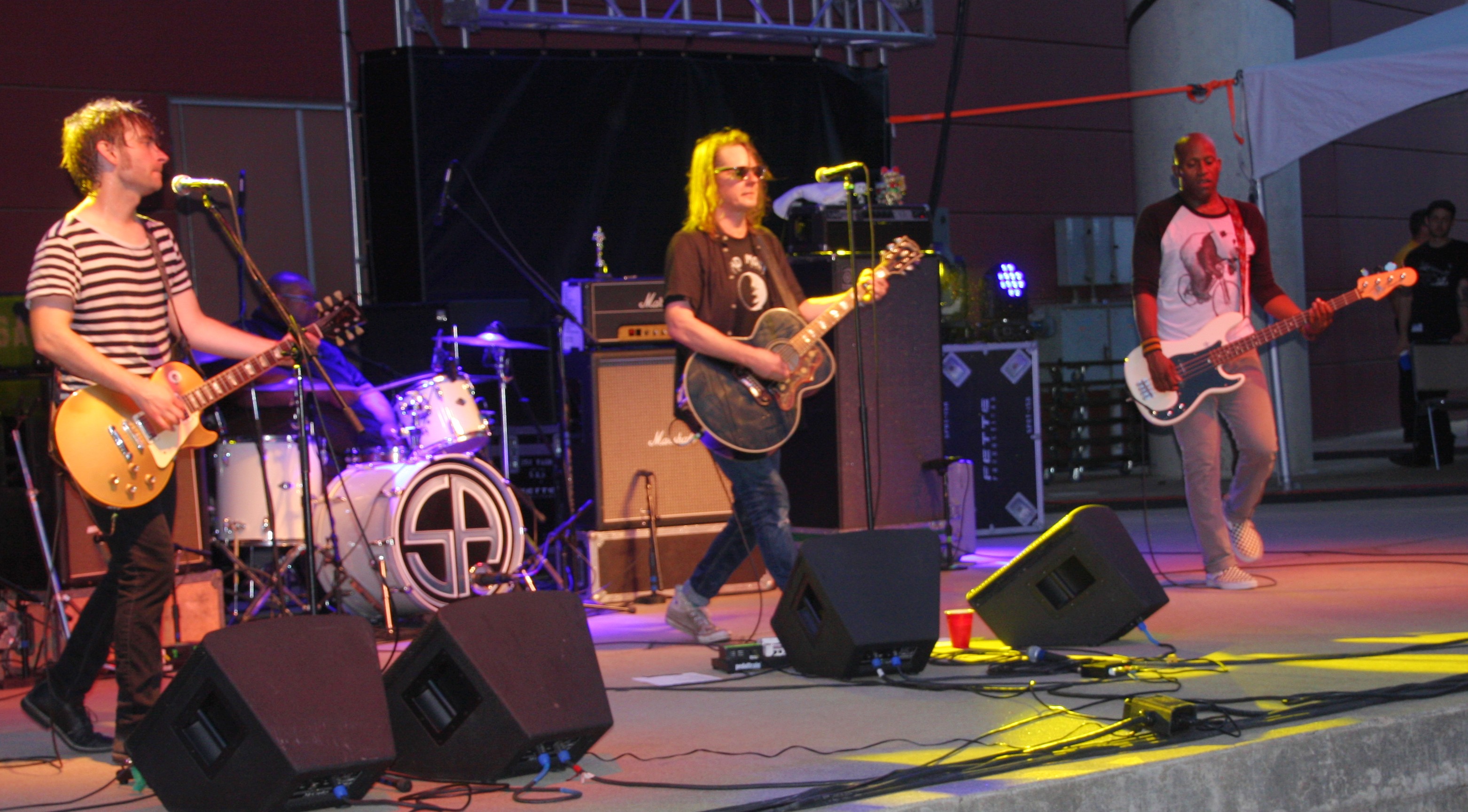
Artist
Soul Asylum
Why we feature this artist The cracked voice behind the radio song Soul Asylum’s best songs keep a little damage in the sound. Dave Pirner can carry a clear melody while seeming on the verge of roughening it beyond recognition, and the band’s guitars give that…
- From
- United States
- Sound
- Alternative rock, grunge, country rock
- Active
- 1981–present
Start with the music
Tracks to explore
The artist, in context
The story of Soul Asylum
Why we feature this artist
The cracked voice behind the radio song
Soul Asylum’s best songs keep a little damage in the sound. Dave Pirner can carry a clear melody while seeming on the verge of roughening it beyond recognition, and the band’s guitars give that voice a fittingly worn setting. The feeling is generous without being especially tidy.
A long road before the breakthrough
The Minneapolis group had already built a substantial catalogue before Grave Dancers Union appeared in 1992. Earlier records such as Hang Time showed a band moving between punk urgency, guitar-rock melody and unruly humour. The rough edges were important. The music could sound as though the musicians were dragging a song into focus rather than presenting a perfectly polished object from the start.
Grave Dancers Union made the melodic strength impossible to overlook. “Somebody to Shove” had a tense, impatient drive, while “Black Gold” let the guitars and vocal stretch out differently. “Runaway Train” placed a more exposed performance at the centre of a carefully building arrangement. Its enormous reach did not mean that the rest of the album shared one tempo or one emotional setting.
The warmth inside the noise
Let Your Dim Light Shine followed in 1995 with “Misery”, whose sharply memorable refrain carried a darker joke than a casual listen might register. The band continued to balance the blunt impact of guitars with a writer’s attention to a revealing phrase. Pirner’s delivery was particularly useful in that space: it could make a song sound rueful, funny or exhausted without needing to announce the change.
The catalogue is worth approaching from both directions. The early records explain the looseness and impatience that survived into the breakthrough, while the later hits reveal how strong the underlying songwriting had become. Soul Asylum are most convincing when those qualities remain in contact. A ballad can still feel a little frayed, and a loud song can make room for empathy rather than using distortion to keep the listener out.
Essential releases
Hang Time
A useful introduction to the restless band behind the later breakthrough.
Grave Dancers Union
The famous ballad belongs to a varied and forceful guitar record.
Let Your Dim Light Shine
Melodic confidence and dark humour meet in songs including “Misery”.