

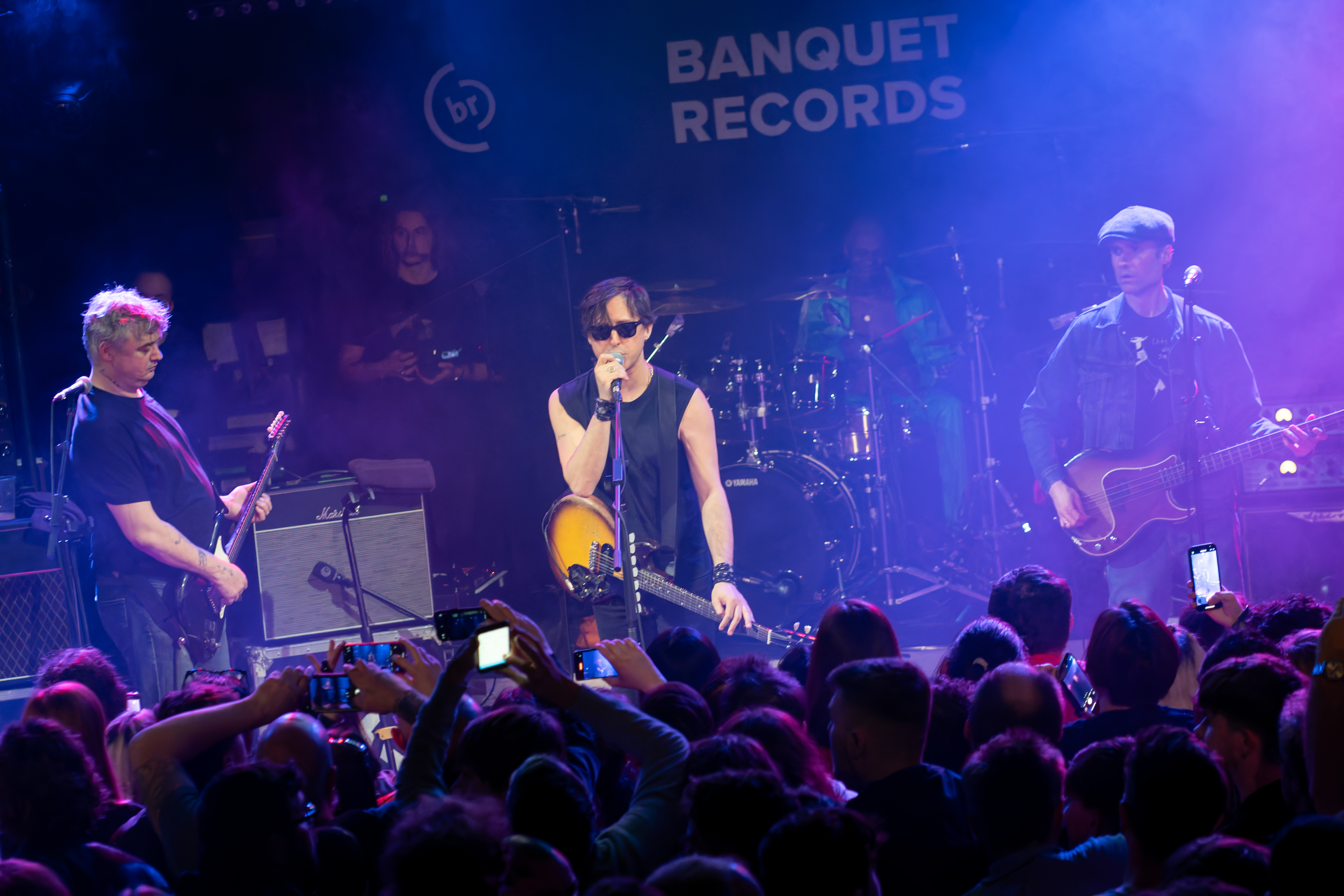
Artist
The Libertines
Why we feature this artist Two writers trying to stay inside the same song The Libertines made the relationship between Pete Doherty and Carl Barât audible as part of the music. A line could be shared, answered or slightly pulled away from the other singer, wi…
- From
- United Kingdom
- Sound
- Indie rock, garage rock, post-punk revival
- Active
- 1997–2004, 2010, 2014–present
Start with the music
Tracks to explore
The artist, in context
The story of The Libertines
Why we feature this artist
Two writers trying to stay inside the same song
The Libertines made the relationship between Pete Doherty and Carl Barât audible as part of the music. A line could be shared, answered or slightly pulled away from the other singer, with the guitars moving through a similarly unstable-looking exchange. The records can sound loose, but the best songs depend on a remarkably clear instinct for melody inside the disorder.
Up the Bracket
Doherty and Barât worked with bassist John Hassall and drummer Gary Powell in the London band that released Up the Bracket in 2002. Mick Jones produced the album, giving the performances a setting that preserved their rough movement without obscuring the song. Time for Heroes, the title track and Boys in the Band established a particular mixture of romantic imagination, impatience and street-level detail.
The rhythm section was essential to keeping that world coherent. Powell could give a sudden turn enough force to make it feel intentional, while Hassall's bass helped hold the song together beneath guitars that often seemed to be moving in different directions. The impression of a performance nearly coming apart became one of the band's most recognisable forms of tension.
The second album and the later reunion
The self-titled second album appeared in 2004, including Can't Stand Me Now and What Became of the Likely Lads. The titles make the personal stakes unusually visible, but the songs remain persuasive as arrangements: vocal exchanges and instrumental responses turn an argument or recollection into something that can be heard from more than one side.
Anthems for Doomed Youth followed in 2015 after the original split and later reunion, with Gunga Din and Heart of the Matter introducing another studio chapter. The gap changed the context, but the musical question remained recognisable: how two strong, sometimes conflicting writing personalities could occupy one band. The most compelling recordings leave some of that negotiation unfinished, allowing affection and friction to remain audible together.
Essential releases
Up the Bracket
Mick Jones' production preserves the early band's volatile movement around songs such as Time for Heroes.
The Libertines
Can't Stand Me Now and What Became of the Likely Lads make the shared vocal drama especially explicit.
Anthems for Doomed Youth
The reunion-period album gives the partnership another set of songs after a long studio gap.