

Artist
The Mock Turtles
Essential information Why we feature this artist The Mock Turtles occupy a distinctive corner of the late-1980s and early-1990s Manchester indie story: melodic enough for radio, psychedelic enough to stand apart, and rhythmically loose enough to connect natura…
- From
- United Kingdom
- Sound
- Madchester, indie rock, baggy
- Active
- 1985–present
Start with the music
Tracks to explore
The artist, in context
The story of The Mock Turtles
Why we feature this artist
The Mock Turtles occupy a distinctive corner of the late-1980s and early-1990s Manchester indie story: melodic enough for radio, psychedelic enough to stand apart, and rhythmically loose enough to connect naturally with the baggy and indie-dance moment surrounding them.
Artist story
Manchester psychedelia with a pop instinct
The Mock Turtles emerged from Greater Manchester at the point where jangling indie, psychedelia and club-informed rhythm were beginning to overlap.
Led by singer and guitarist Martin Coogan, The Mock Turtles developed through the late 1980s around the independent Imaginary Records scene. Early singles and compilation appearances placed them firmly in the British indie underground, but their songwriting already leaned toward strong melodic hooks rather than abrasion or deliberate obscurity.
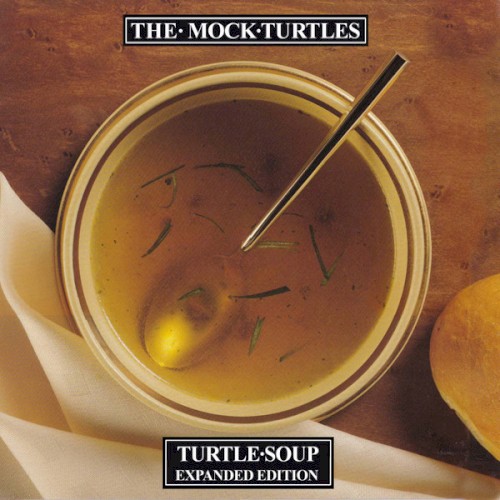
Their debut album Turtle Soup arrived in 1990 and brought together much of that early identity: chiming guitars, psychedelic colour, relaxed grooves and concise pop structures. Tracks such as “Lay Me Down,” “And Then She Smiles” and “How Does It Feel?” captured a band sitting naturally beside the broader Manchester and baggy movement without sounding like a direct copy of its biggest names.
The breakthrough came with “Can You Dig It?” in 1991. Released through Siren, the track reached number 18 on the UK Singles Chart and became the song most closely associated with the band. Its combination of circular guitar riff, buoyant rhythm and instantly memorable chorus made it especially compatible with the indie-dance crossover of the period.
The Mock Turtles did not convert that breakthrough into a long sequence of mainstream hits, but their catalogue retained a cult following. “And Then She Smiles” also entered the UK chart, while the albums Turtle Soup and Two Sides both appeared on the Official Albums Chart in 1991.
More than a decade later, “Can You Dig It?” returned to public attention through a Vodafone advertising campaign. A 2003 reissue, including a remix by Fatboy Slim and Simon Thornton, returned the song to the UK Top 20. The revival reinforced what had become clear over time: The Mock Turtles may be remembered through one enormous song, but that song came from a broader catalogue with its own melodic and psychedelic character.
Career timeline
Key moments
Selected milestones from the band’s independent beginnings to the 2003 revival of their signature track.
Early Imaginary Records period
The band begins releasing material through Imaginary Records, including the early Pomona release and appearances on the label’s tribute projects.
Wicker Man and And Then She Smiles
A run of independent releases establishes the band’s psychedelic, melodic guitar sound before its commercial breakthrough.
Turtle Soup
The debut album consolidates the Mock Turtles’ Imaginary Records material and becomes the central document of their early catalogue.
Can You Dig It? reaches the UK Top 20
The Siren single peaks at number 18 on the Official UK Singles Chart and remains on the chart for eleven weeks.
Two charting albums
Turtle Soup reaches number 54 and Two Sides reaches number 33 on the Official Albums Chart.
And Then She Smiles charts
The single reaches number 44 in the UK, giving the band a second chart entry during its commercial peak.
Can You Dig It? returns
Following renewed exposure, the song is reissued with a Fatboy Slim and Simon Thornton remix and reaches number 19 in the UK.
Turtle Soup expanded
Cherry Red issues a two-disc expanded edition collecting the album, non-album singles, B-sides and the band’s Imaginary Records cover versions.
Discography
Essential releases
A compact discography where the debut album and later retrospective editions carry most of the band’s essential recorded work.
Start here
Essential tracks
Six recordings that move from the signature hit into the deeper melodic and psychedelic side of the catalogue.
Legacy
More than one Manchester-era anthem
“Can You Dig It?” remains the obvious entry point, but The Mock Turtles’ importance is better understood in the context of the indie-dance crossover around Manchester at the start of the 1990s. Their music combined guitar-pop craft with the loose rhythmic feel that allowed indie records to coexist naturally with club culture.
The song’s successful 2003 return—again reaching the UK Top 20—gave the band an unusual second wave of recognition. The later Cherry Red expansion of Turtle Soup has also made the wider Imaginary Records catalogue easier to reassess, revealing a group with considerably more psychedelic and melodic range than the one-hit shorthand suggests.
Manchester context
Inside the indie-dance crossover
The Mock Turtles were part of the wider moment when British guitar music and club rhythm began sharing the same cultural space.
Baggy without imitation
The band is regularly associated with Madchester and baggy, but its strongest recordings retain a distinct psychedelic-pop and jangling indie character.
2003 Fatboy Slim remix
Fatboy Slim and Simon Thornton remixed “Can You Dig It?” for its 2003 revival, reconnecting the track explicitly with dance culture more than a decade after its original success.
Support the artist
Official destinations
Verified destinations for the band’s music and catalogue.
Editorial profile prepared using Official Charts, MusicBrainz, Spotify, Cherry Red Records and the band’s official Facebook page.